
Our Glenda Spooner Farm team explain how they help newly arrived semi-feral ponies build confidence.
Posted on 18/11/2026
Share


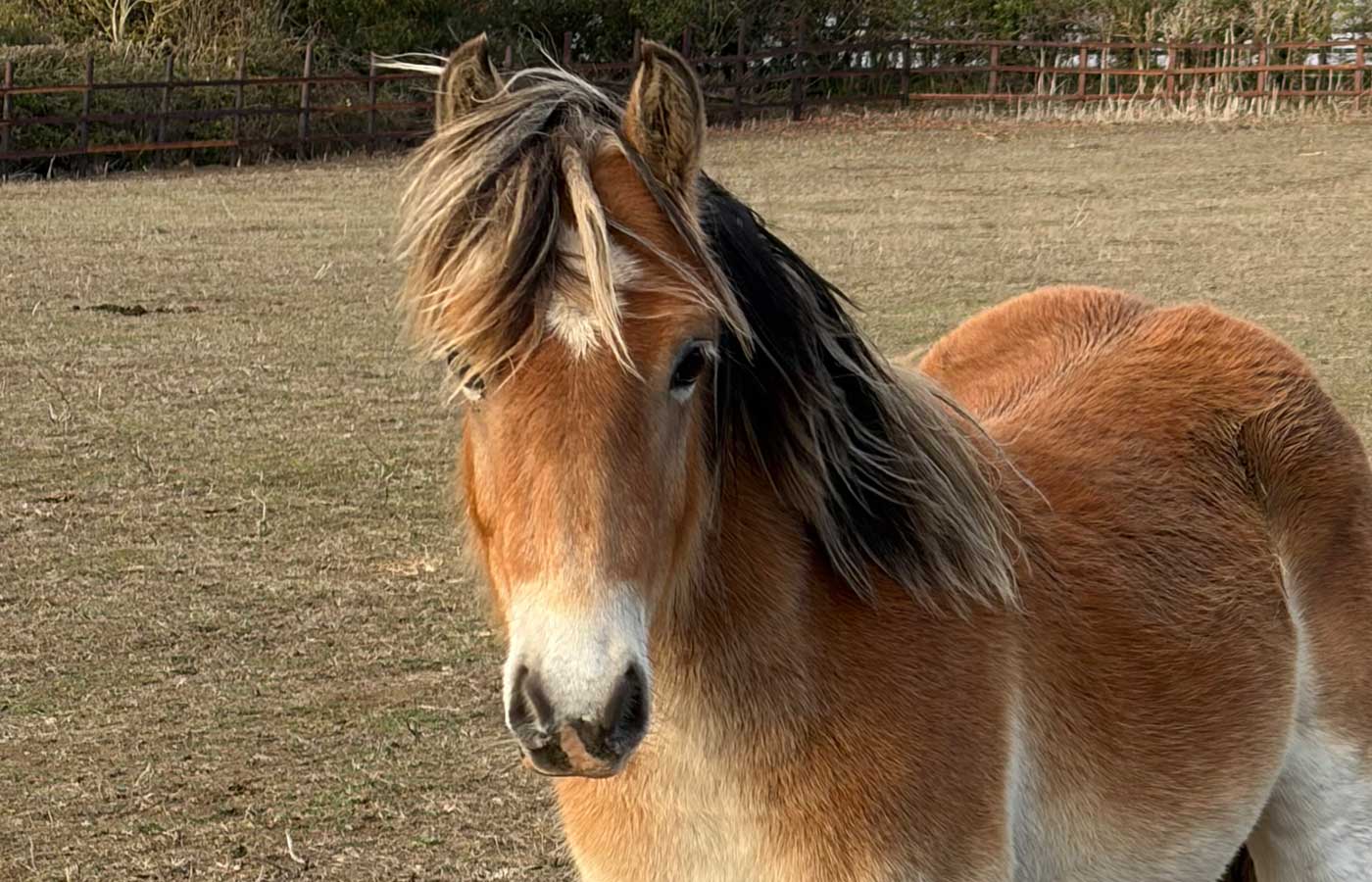
Nine ponies from Gelligaer Common have recently come into our care following the latest multi-agency round-up on the Welsh common, which saw six of our Field Officers, two of our grooms and one of our UK Welfare volunteers providing support on the ground.
For semi-feral ponies who’ve only ever had limited experience of human contact, leaving the common where they’ve spent their whole lives and travelling to one of our rescue and rehoming centres is a big deal. Knowledge gleaned from years of rehabilitating semi-feral horses means we know that younger ponies find it much easier to adapt to domesticity than older ones, so the round-up team focuses on identifying youngsters who are most likely to thrive in their new life.
Field Officer Rachel Andrews explains how the team identify which ponies are suitable:
“We’ll look for a small group of youngsters, ideally last year’s foals or two-year-olds. Some of the ponies are more comfortable around people than others, so we try to pick out confident ones as we know they usually adapt to life off the common much more easily.
“Once we identify some suitable ponies – often around three to five who are clearly a little herd – they can be penned together before being loaded and travelled as a group. They can also be turned out together once they arrive at the farm. This approach makes it much less stressful for the ponies and gives them the best possible chance of adapting to their new chapter well.”
Once the ponies arrive at one of our farms, our grooms use their extensive experience of working with unhandled horses to give them the best possible start.
Getting to know the new arrivals while they settle in
Five of the new ponies from the latest round up have been taken into our Somerset centre, Glenda Spooner Farm, with the other four going to Penny Farm near Blackpool.
Sara Jerman, Assistant Centre Manager at Glenda Spooner Farm, explains what happens when the ponies arrive:
“With any semi-feral pony, it’s important we give them plenty of time and space to adjust to their new surroundings. We turn them out in their groups and two of our most experienced team members will quietly check on them from a distance, gradually getting them used to being around people. The new arrivals are understandably still wary, but we can already see their individual personalities emerging. Some seem much more curious than others and usually they’re the first to choose to interact with us.”

With the layout of the farm’s quarantine unit, the ponies are able to choose to explore the yard at their own pace. Sara continues:
“We left them in the field to begin with, with the gate to the yard closed. After about a week, when they seemed pretty settled in their new environment, we gave them the choice to explore the yard. Bearing in mind that these ponies have probably never encountered concrete in their lives before coming here, choosing to walk into the yard is a big step for them. The bolder ones went in to explore quite quickly – you can definitely see the native pony curiosity in them.”
Finding hay in the yard helps the ponies form positive associations with the new environment. In time, this will help them feel comfortable remaining in the yard with the gate closed.
Helping the ponies learn with confidence
Yard Supervisor Amy McCormack is one of the farm’s most experienced team members when it comes to working with unhandled horses. She says:
“Over the next few weeks, we’ll continue quietly letting the new arrivals get used to having us around. Once the more curious ones start to interact with us, we can use positive reinforcement, such as food, to make the experience rewarding before gradually introducing scratches.
“Both physical and mental wellbeing are at the centre of each pony’s rehabilitation plan. We aim to progress their much-needed vet care as quickly as possible, but always ensuring that we’re building on a foundation of ethical, science-based training methods.
“We’re really careful to avoid overwhelming them and monitor each pony very closely for any signs of stress both during and after training sessions. Building a solid foundation based on positive experiences creates resilient and optimistic ponies who genuinely enjoy their time with us.”

Getting ponies successfully rehabilitated isn’t just about teaching basic handling skills, it also includes supporting them to build their confidence within new herds. Amy explains:
“During that initial settling in period, we’re not just assessing how each pony might prefer to be worked with – we’re also evaluating how they’re likely to mix with other horses and ponies on the farm. When a group of semi-feral youngsters comes into our care, it can be beneficial in the longer term to gradually separate them from their original companions, when appropriate, and introduce them to some of our older, established ponies.
“Getting young ponies integrated with other groups helps get them back to an established herd structure, which they will have been used to on the common. It also means the older ponies can remind them of social boundaries. Good social skills are just as vital as handling skills when it comes to creating a well-rounded pony who’s ready for rehoming.”
Integrating semi-feral ponies with existing herds on the farm also makes it easier and safer for the team to work with one individual pony. Amy explains:
“With a group of youngsters, once they’re confident you tend to get all of them coming over to you at the same time, which doesn’t make for a particularly successful learning environment! Being able to work with one pony at a time in the field makes a huge difference in their progress. That way, they’re still close enough to their friends to take confidence from them but also able to focus on the skills they’re learning from us.
“We always work at each individual pony’s pace, and some need much more time than others to build their confidence. One of the nine ponies we took in from Gelligaer Common in November 2023 turned out to be a five-year-old stallion. Now gelded, he’s only recently reached the point of being ready for rehoming – considerably later than the younger ponies in the group.”
Finding the perfect home for earlier arrivals from Gelligaer Common
The latest arrivals are not the first ponies from Gelligaer Common to have been cared for at Glenda Spooner Farm. Nine arrived following a round-up in November 2023, while five others had been rescued from the common as welfare concerns earlier the same year. Among that earlier group was a little strawberry roan colt named Wrigley.

By the following summer, Wrigley had been successfully rehabilitated and was ready for his next chapter. He found a home as a companion with our Education Officer, Rebecca Boulert, who says:
“I’d realised the young gelding in our two-pony herd needed a friend who would play with him. I spoke with the team at Glenda Spooner Farm and explained what I was looking for, then was invited to come and meet two ponies – Wrigley and Humbug. Once I’d spent some time with them both, I thought Wrigley would fit in beautifully with our little herd – and he really has.”
Once he’d settled in, Rebecca started exploring new skills with Wrigley and found that his earlier training had given him a positive, confident approach to unfamiliar experiences. She says:
“Wrigley approaches new experiences with real confidence and enthusiasm, which has made my life so much easier as his rehomer. As soon as he sees the treat pouch and realises that a training session is about to take place, he wants to be involved. We’ve been doing some horse agility-type things, and I think he’d love in-hand TREC, so we might have a go at some of that when he’s a bit older. He also loves going out for walks with my other pony, Fi, and has loads of admirers in the village!”

Another pony flourishing in her new home is Poppy, who was born at Glenda Spooner Farm in summer 2024 after her mother arrived from Gelligaer Common in foal. Sara says:
“Poppy found a home as a youngster in March 2026, having proved to be a really friendly little pony. We always love getting updates on our rehomed ponies and were delighted to hear from her rehomer recently that Poppy had made her debut in the show ring and won her class. Her rehomer has done a fantastic job with her and it’s great to see Poppy flying the flag for rescue ponies – we’re all very proud of her.”

Looking for long-term solutions for semi-feral populations
A collaborative approach is often key to resolving welfare issues successfully, and the situation of the ponies on Gelligaer Common is no different. On 8th September 2026, Glenda Spooner Farm hosted the first-ever Equine Common Ground Conference, bringing together people involved with commons and moors across England and Wales to share their experiences and discuss solutions. Attendees included welfare charities, commoners’ associations, breed societies, local authorities, land managers, enforcement agencies and veterinary organisations.
Round-ups currently play an important part in managing the pony population on Gelligaer Common, but sustainable progress will depend on developing practical measures that address the root causes of welfare problems affecting semi-feral ponies. The conference was designed to support greater collaboration and help identify potential long-term solutions. You can read more about the inaugural Equine Common Ground Conference and the issues discussed here.
For now, the latest arrivals from Gelligaer Common are being given the time and space they need to settle. They’ll each be supported to progress at the pace that’s right for them, but Wrigley and Poppy show what patient, expert rehabilitation and the right home can make possible. If their stories have inspired you to offer a home to one of our horses or ponies, check out our rehoming pages.
If you believe every semi-wild horse deserves to have someone taking responsibility for their welfare, making sure they receive the care, forage, water and protection they need, add your voice to our pledge now.
Share
Topics
Related Blog Posts
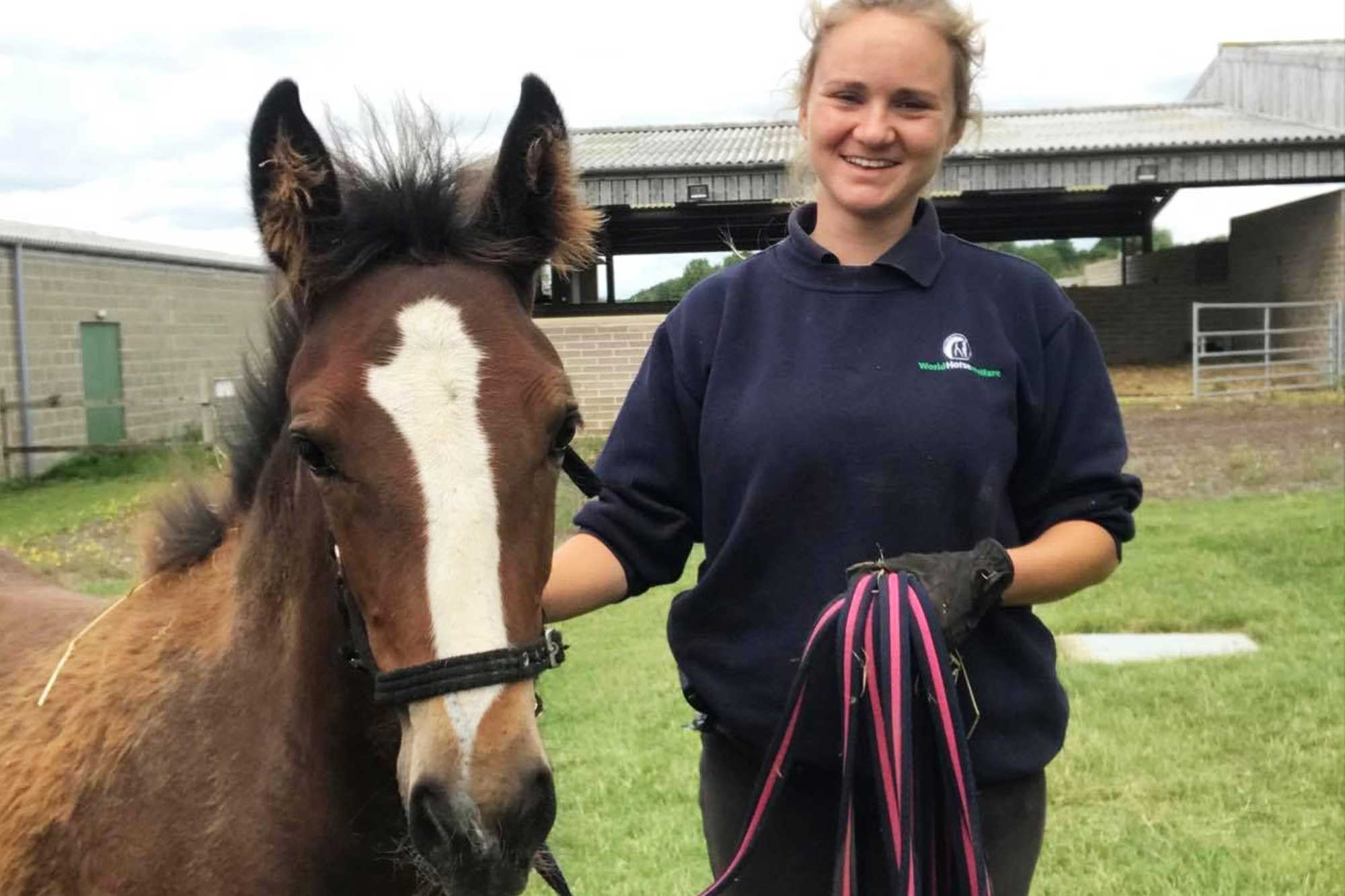
Buena’s story – how our foals are cared for from birth to rehoming
Senior Groom Steph introduces lovely filly Buena and explains how the team care for foals from birth right through to finding them a loving home for youngster handling.
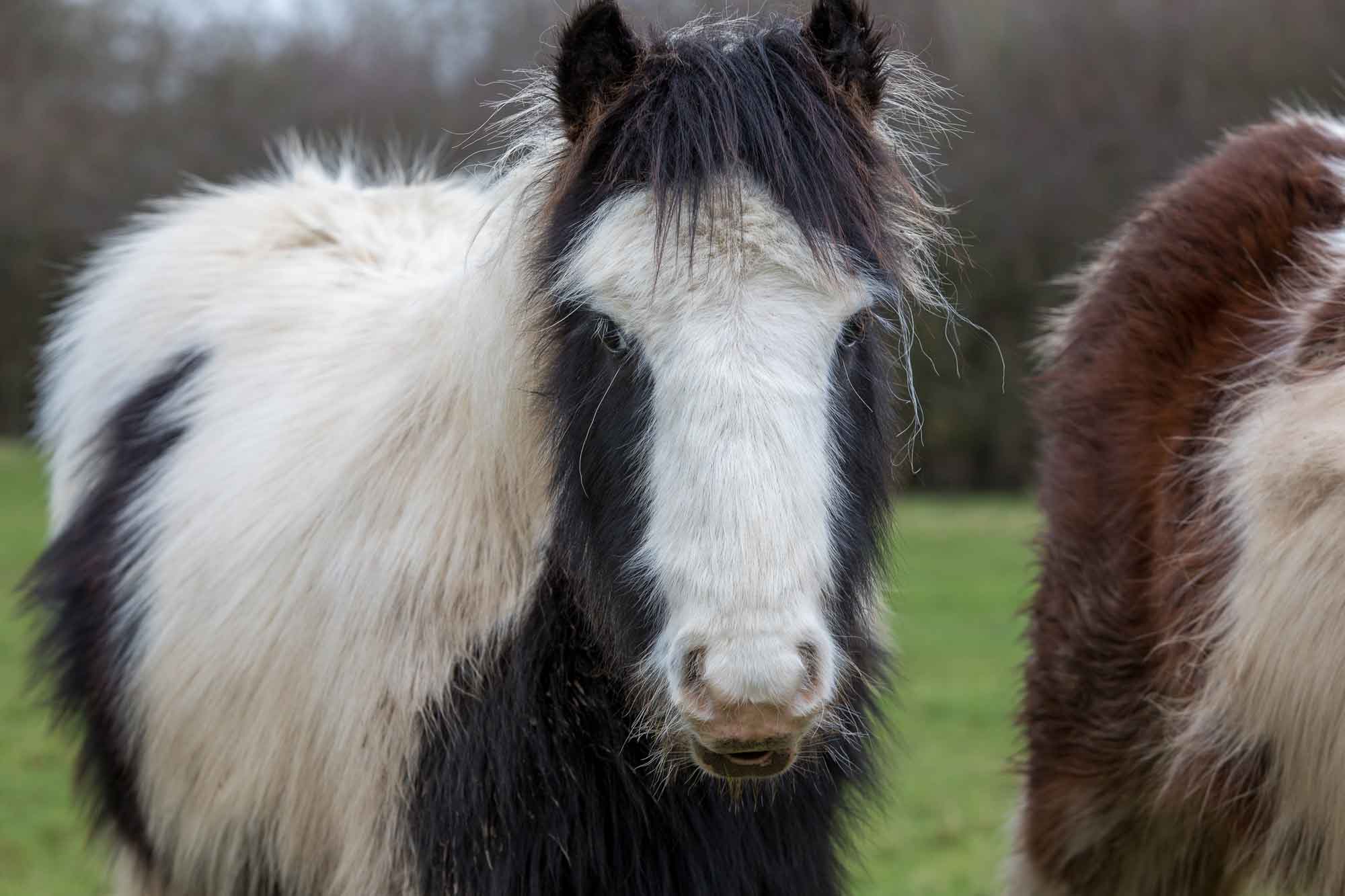
Behind the scenes: the first few months as a World Horse Field Officer
Find out what really goes on behind the scenes as a World Horse Welfare Field Officer.
Recommended News Articles
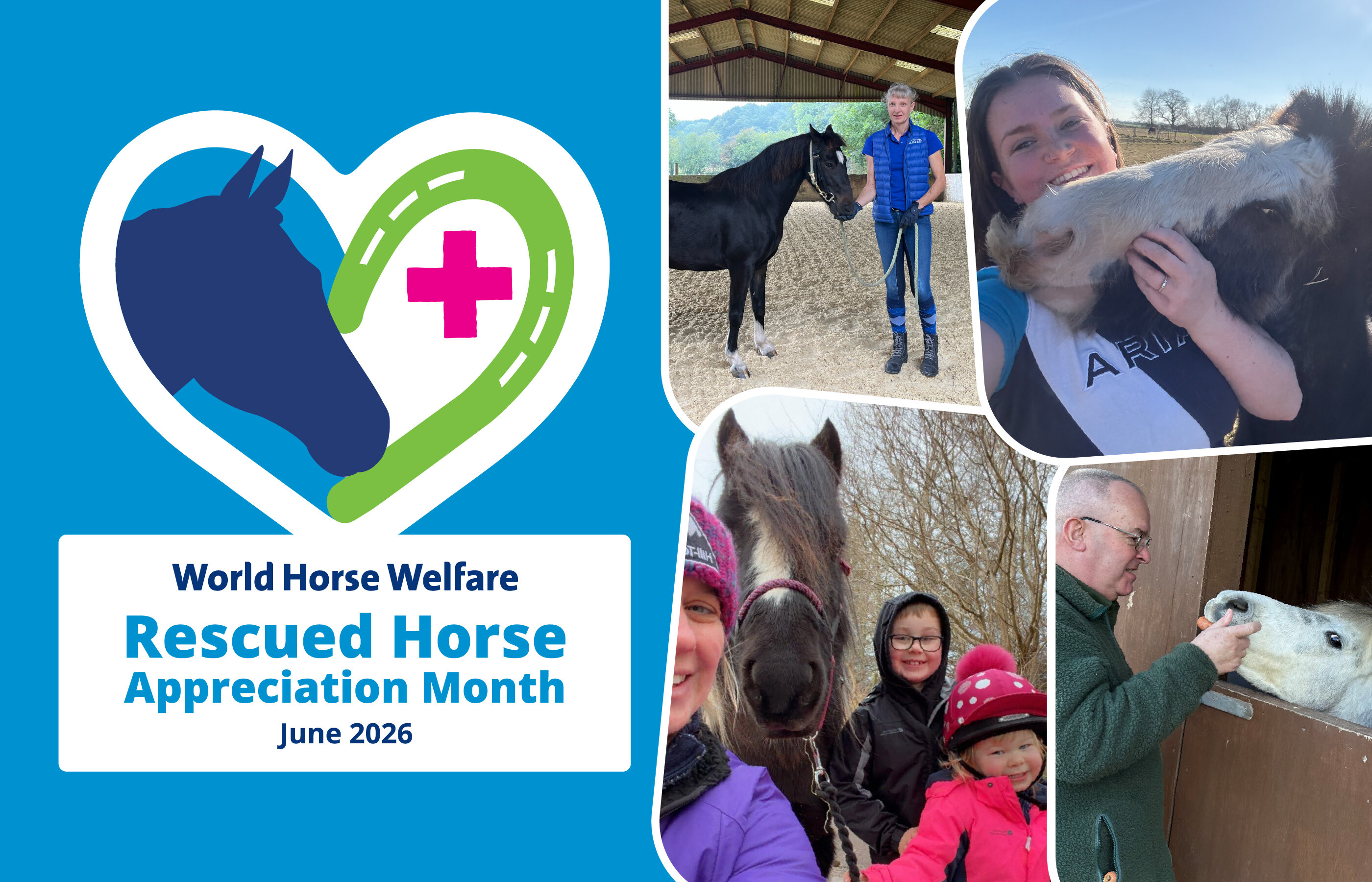
We’re launching our very first Rescued Horse Appreciation Month
All our horses are very special, but this is your chance to share just how amazing YOUR rehomed horse, pony, donkey or mule is.

Technology triumphs to track down isolated ponies
Our latest film shows Field Officer Rachel Andrews taking on some of Britain’s least hospitable terrain to check on a remote herd of ponies.

Cranberry’s Christmas Cheer
Rehomed pony proves herself ahead of Christmas by winning her first competition!
Enjoy reading stories like this?
Join over 65,000 other horse lovers and sign up for our email newsletter
Join over 65,000 other horse lovers and sign up for our email newsletter
Sign me up now
