
A new beginning at Hall Farm as rescued mare Daisy welcomes foal, Pompey
Posted on 17/04/2024
Share


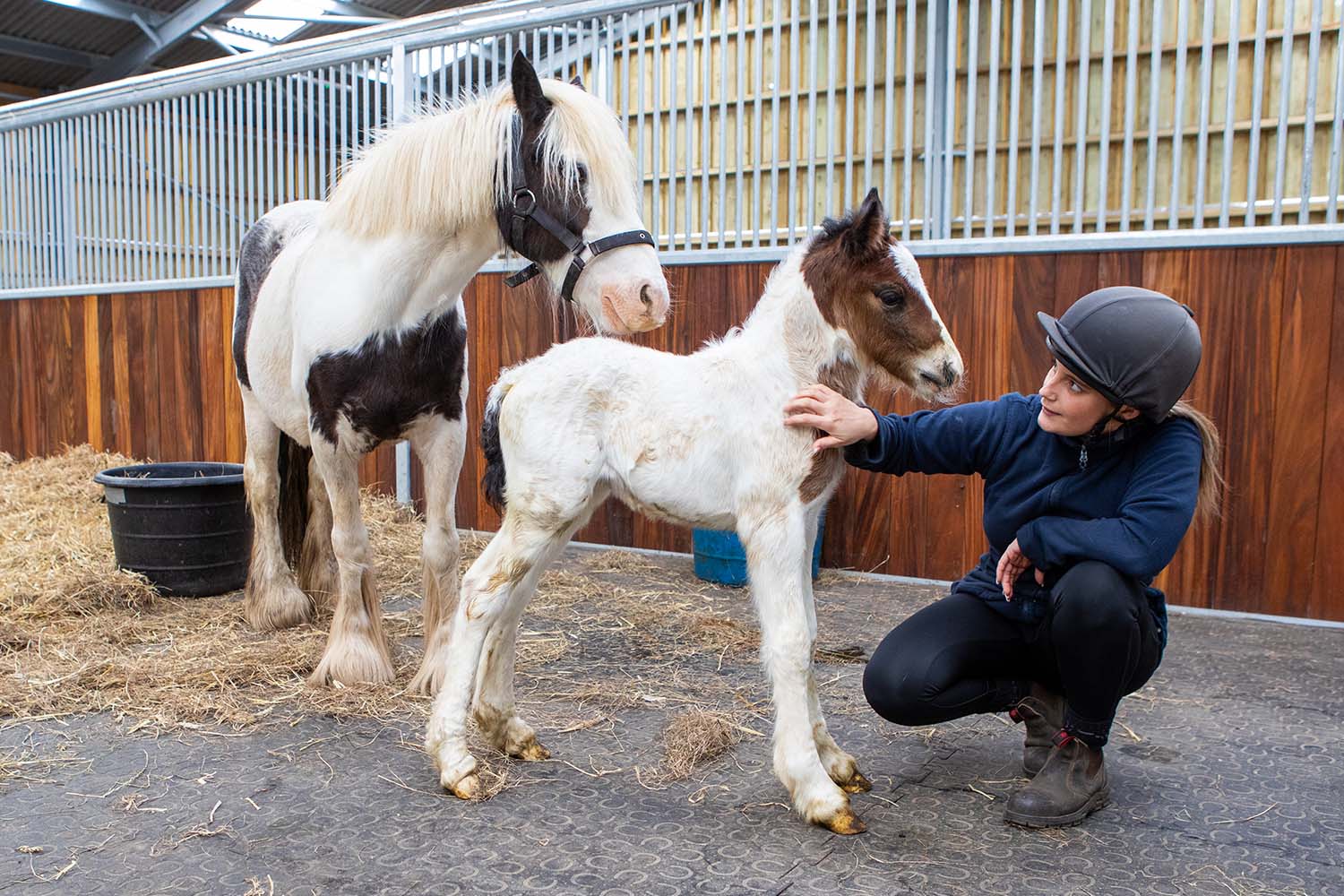
Our first foal of the year at Hall Farm also marks the first born to one of five pregnant mares that were rescued from being smuggled out of the UK and believed to be heading to a European slaughterhouse.
The skewbald mare named Daisy gave birth to a healthy foal on Friday 12 April and the colt has been named Pompey after the British port of Portsmouth to highlight our ongoing efforts to stop the illicit movements of horses in and out of the UK.
“Pompey is a bundle of joy. It fills my heart to see them relaxed and happy here now, with a secure future ahead of them. Whilst they will remain in our ownership for the rest of their lives, our aim is for them to find loving new homes – although it will be months before Pompey is weaned. Such a different outcome and I can’t bear to think about what their future might have been.“
Holly Roe, Senior Groom
Six-year-old Daisy is one of the ‘Dover 26’ – a group of horses and ponies intercepted by port officials from being illegally smuggled into Europe and rescued by us. The mixed group, which included elderly animals, pregnant mares and frightened youngsters was discovered in an overcrowded and filthy vehicle, with many unfit for their intended journey and seven of the group undeclared to officials.
Whilst Daisy could be identified through her microchip and replacement passport, she wasn’t traceable and to date the only available record of her is that she, along with eight of the Dover 26 horses, was bought at an auction in the North-west of England just a week before being discovered at Dover. Despite this, Daisy and all the declared horses on board were travelling on EU documentation which stated their place of origin as the Republic of Ireland. We believe these horses had never set foot outside of Great Britain and by declaring them as an EU-to-EU movement and using GB as a land bridge, the illicit traders knew that they would undergo less stringent checks and could drive out of the green lane when they reached a European port.
Pompey’s poignant birth underscores the harsh realities faced by vulnerable animals caught in this illegal trade in horses. Transported for days without rest in overcrowded and unsanitary conditions, these horses suffer from a lack of basic necessities such as food and water, endure rough handling, and are exposed to increased risks of disease and injury. It will be many months before both Daisy and her foal are ready to be rehomed, and Pompey alone will cost in the region of £5,000 a year to look after.
Share
Topics
Related News
World Federation For Animals highlights missed opportunities at UNEA-6
WFA disappointed at failure to highlight link between animal welfare, the environment, and sustainable development.
Recommended Blog Posts
Celebrating our international colleagues
On International Women’s Day, we catch up with some of the inspirational women from our International team.

“I would recommend rehoming any horse or pony from World Horse Welfare”
We catch up with award-winning novelist Jojo Moyes to find out about her rehomed horse Mayble.

The senior horse: nutrition in sickness and in health
Find out more about the key considerations when caring for older horses, whether in work or retired and whatever their health status.
Enjoy reading stories like this?
Join over 65,000 other horse lovers and sign up for our email newsletter
Join over 65,000 other horse lovers and sign up for our email newsletter
Sign me up now
