
EU poll shows strong support for tougher horse transport welfare laws
New research across five EU countries reveals strong public backing for a nine-hour slaughter journey limit and better protection for all equines.
Posted on 11/09/2026
Share


In February 2026, we asked over 5,000 EU citizens for their views on the current state of equine welfare standards in Europe, and whether they would support stronger protections for horses suffering under the meat trade.
Our Director of Communications and Public Affairs, Jessica Stark, explains what the poll results reveal, and how they will strengthen our efforts to influence decision-makers this autumn as they make vital decisions about the future of slaughter horses in Europe.
The results from our public opinion poll1 show that, on average, the majority of European citizens support proposed changes to the law which would dramatically improve welfare standards for thousands of horses forced to endure long journeys across Europe for slaughter.
The YouGov poll, which surveyed more than 5,000 EU citizens across France, Germany, Italy, Spain, and Poland, found that two-thirds (67%) support the introduction of minimum welfare standards for all horses. Meanwhile, over half (55%) support a nine-hour journey limit for horses sent to slaughter. A measure which would put an end to the gruelling journeys these animals currently suffer for days on end.

This show of public support comes at a critical moment for some of Europe’s most vulnerable horses. As EU decision-makers debate proposed changes to transport laws that would significantly improve the lives of horses caught in the meat trade, there is a narrow window of opportunity to secure these long-overdue protections. Negotiations resume this month, with a decision currently expected by the start of next year.
Here’s what our EU poll found:
Transport is seen as a significant welfare risk
Transport is widely considered to be a welfare issue for horses in Europe, with six in ten of EU citizens polled (60%) believing that transport poses some degree of risk to equine welfare.
They are right to be concerned. Last year, approximately 192,500 horses were transported alive across EU borders, a tide of movement that continues today. While most of these horses are moved safely for reasons that have nothing to do with slaughter, many are still forced to endure far more difficult journeys without adequate safeguards to protect their welfare.
Travel is a stressful experience for a horse at the best of times, and journeys of any length can pose a risk of injury, dehydration, disease and exhaustion. However, the longer a journey goes on, the more serious these risks become.
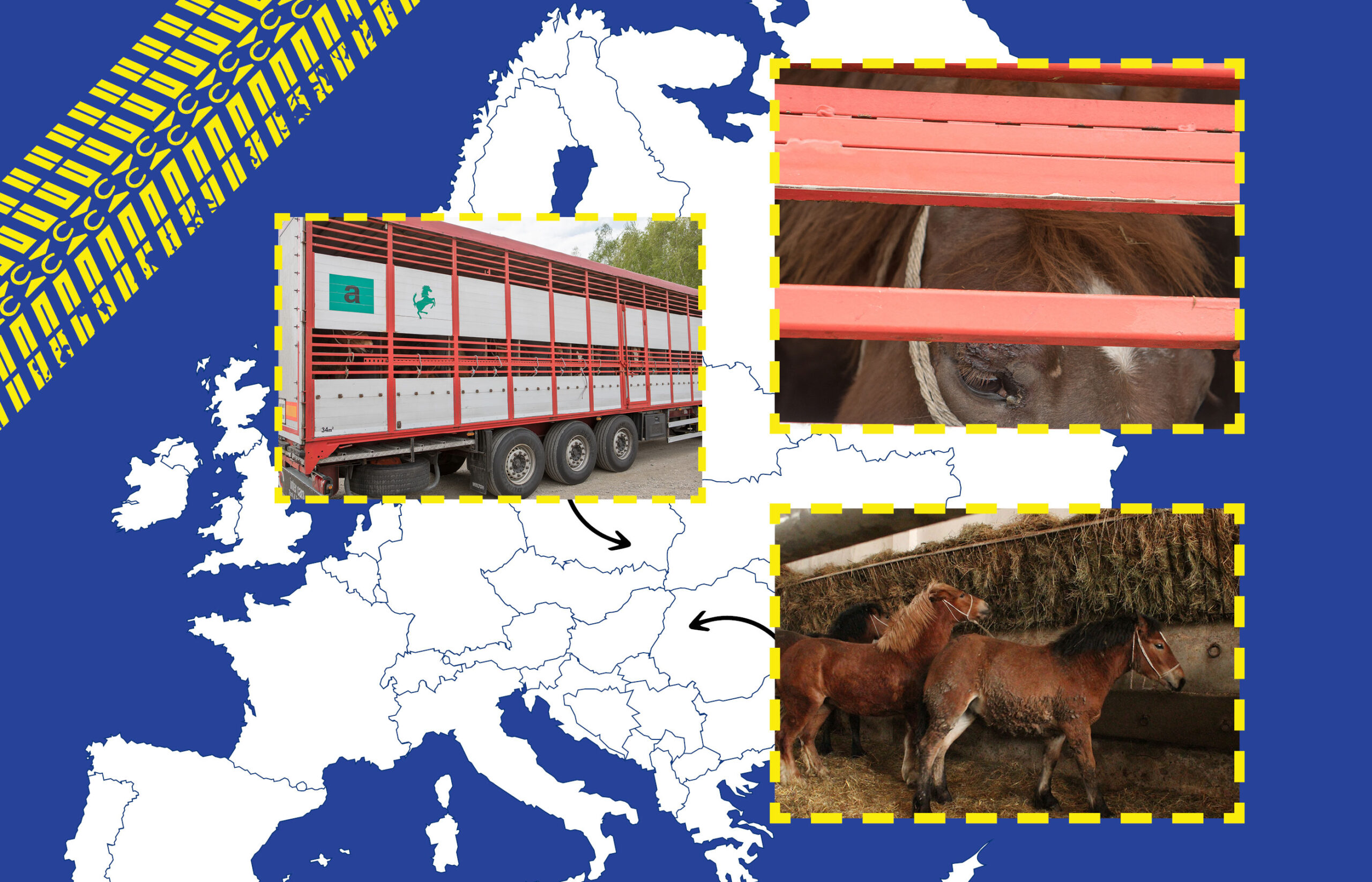
Unfortunately, it’s not unusual for horses transported across Europe for slaughter to spend days on end in transit.

Horses transported for slaughter deserve equal protection
The sad reality is that around 13,000 horses were transported long distance to slaughter in 2025.
For these horses, their final journey to the slaughterhouse can stretch beyond 60 hours under punishing conditions. Investigations have found horses crammed into hot, crowded lorries, deprived of adequate food, water and rest.
Because the law doesn’t adequately cover every equine transported (such as those moved for sport and leisure) it’s easy for traders to exploit loopholes. These allow them to falsely declare their movements and quietly travel horses to slaughter. In this trade, horses are simply cargo – their fear and suffering an accepted cost of doing business.
However, European citizens take a different view. A clear majority (67%) agree that minimum welfare standards should apply to all horses, regardless of their role or perceived commercial value.
What’s more, their support extends to all equines – including horses, donkeys and their hybrids, with 58% backing equine-specific legislation to ensure every animal receives the protection they need.
In other words, the public does not differentiate between a million-dollar racehorse, a companion pony and a horse bred for the meat market. All are equally deserving of compassion and respect right up to the end of their lives – and that includes during any journey to the slaughterhouse.
EU citizens support a nine-hour journey limit to slaughter
Under current EU law, horses transported for slaughter (along with unregistered horses) can be moved for up to 24 hours at a time, followed by a 24-hour rest period. But the ordeal doesn’t end there. This cycle can be repeated indefinitely, meaning that journeys can – and do – go on for days on end.
Encouragingly, as part of its review of current transport laws, the European Commission has proposed to introduce a nine-hour journey limit for animals transported to slaughter – something that we strongly support. Over half of EU citizens surveyed (55%) also back this measure, while very few (16%) would oppose it.
A nine-hour limit would have major consequences for Europe’s horse meat trade. Because many of the trade paths currently used to move horses for slaughter (for example, from Eastern Europe to Italy) cannot be completed within nine hours, these routes would effectively be closed for good. Traders would be required to use slaughterhouses closer to home, sparing horses from these relentless journeys.

Horses are in Europe’s blind spot
It’s clear from these poll results that EU citizens are concerned about horse welfare, particularly when it comes to the suffering associated with live transport to slaughter. However, worryingly, when asked about the state of current equine welfare standards in the EU, many are uncertain.
There is a general feeling that standards decrease once horses go beyond national borders, with most citizens in all five countries believing that standards are better at home than in the EU. For example, in France, 42% of respondents believe that standards are good within their own country, versus just 28% placing the same trust at EU level.
Meanwhile, almost half (45%) admit that they simply do not know whether standards at either end are good or bad.

We believe these responses point to a blind spot in EU citizens’ understanding of how horses in Europe are currently treated, both in law and in practice. This may be partly due to the enduring idea, at least in the western world, of horses as high-value animals who are generally treated well – one which, sadly, doesn’t always reflect reality.
This perception may also be reinforced by the fragmented state of current laws on horse welfare during transport. Because the rules that apply depend on what a horse is being used for (which can change over time, across borders, or through dishonest declarations by traders) some receive better protection than others. That’s why future laws must protect all equines, regardless of their use.
We’re preparing to up the pressure
We’re approaching a critical point in our push to end the long-distance transport of horses across Europe to slaughter.
As negotiations on proposed changes to transport laws enter their next phase, we’re pushing for a nine-hour maximum journey limit and stronger, species-specific protections for all horses. We now know these measures are backed by the public in at least five major European countries.

This poll sends a clear message: the public expects better protection for Europe’s horses, and their concerns must be taken seriously. While long-distance journeys to slaughter have reduced significantly over recent years, thousands of horses are still subjected to this ordeal. We will continue to press MEPs and EU Member States to make sure that revised laws mark a step forward, not backwards, for equine welfare.
We’ve already made significant progress. Last year, just 13,000 horses were transported across EU borders to slaughter, compared to 88,000 back in 2019. But there is still more to do: we won’t stop until every single horse in Europe is protected from these arduous journeys.
None of this progress would have been possible without our supporters, whose tireless campaigning and donations have brought us this far and kept this vital work moving forward.
As we approach this next hurdle, we’ll need your support to help ensure that slaughter horses in Europe have a meaningful voice in the laws that will shape their welfare for years to come.
- All figures, unless otherwise stated, are from YouGov Plc. Total sample size was 5,258 adults (France N=1020, Germany N=1131, Spain N=1006, Italy N=1088, Poland N=1013). Fieldwork was undertaken between 5th – 12th February 2026. The survey was carried out online. The figures for each country have been weighted and are representative of all adults in that country (aged 18+). World Horse Welfare have taken averages of the polling data for each country to give an overall figure. ↩︎
Share
Topics
Related Blog Posts
The Trafficked 20 – what do we know so far?
Our Head of Public Affairs brings us up to date with what we currently know about the horses rescued from illegal smuggling.
A (nearly) century long commitment
Ending the long-distance transport of horses for slaughter.
Recommended News Articles

Mrs Potts staying trim with the support of Baileys Horse Feeds
Keeping Mrs Potts at a healthy weight has been a challenge but now, with the support of feed company Baileys Horse Feeds, a healthy balance has been found.

World Horse Welfare’s World Horse Trail
The World Horse Trail: a unique sculpture trail featuring 40 stunning designs.
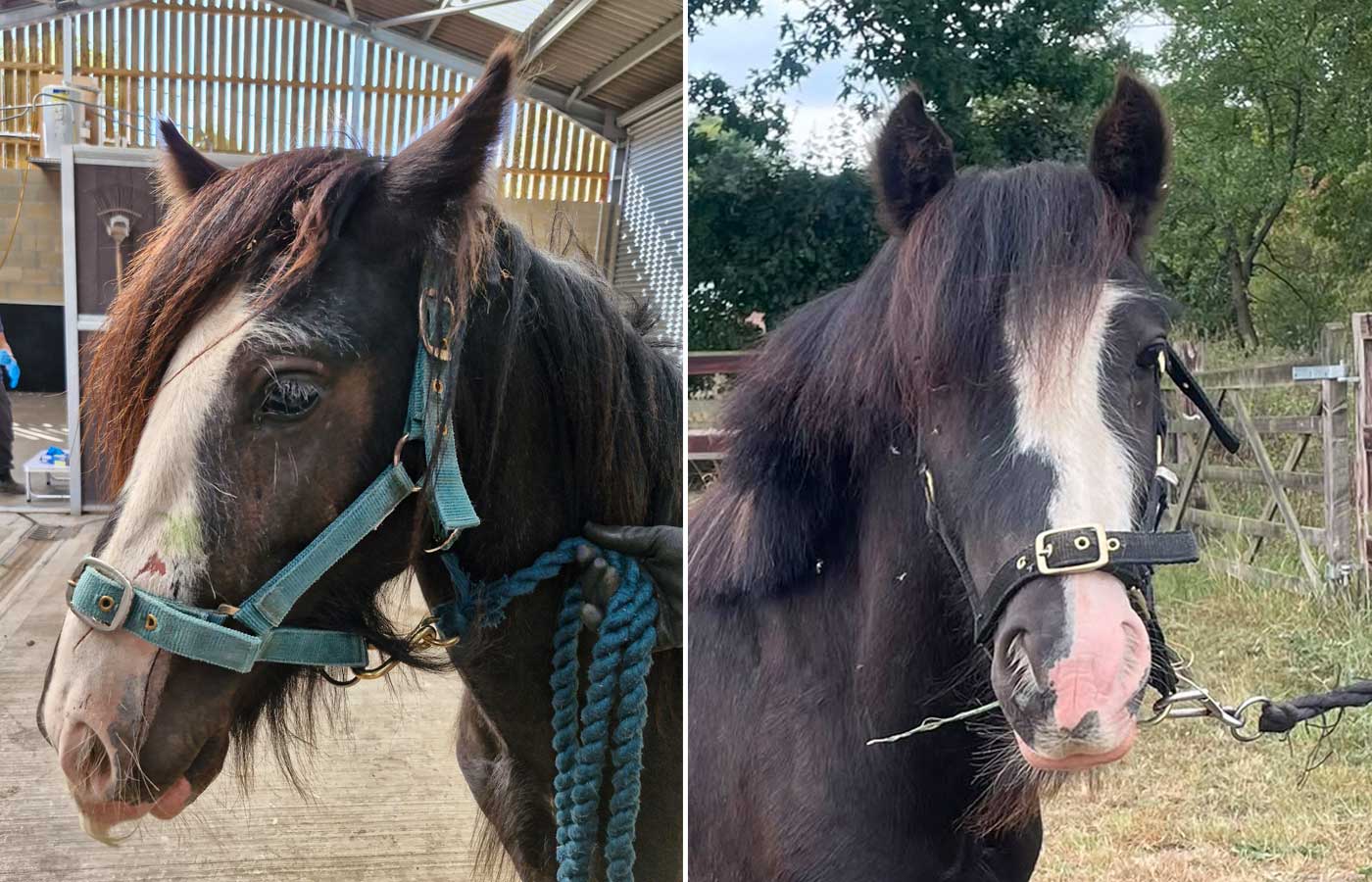
Arthur was hit by a car – but now he’s thriving at Hall Farm
Despite suffering multiple injuries, he’s recovering well in our team’s expert care.
Enjoy reading stories like this?
Join over 65,000 other horse lovers and sign up for our email newsletter

Join over 65,000 other horse lovers and sign up for our email newsletter
Sign me up now
