
Dismay at proposed huge backwards step for welfare of slaughter horses in EU
The European Council has proposed increasing journey time limits for horses being transported to slaughter to 31 hours by road.
Posted on 16/10/2026
Share


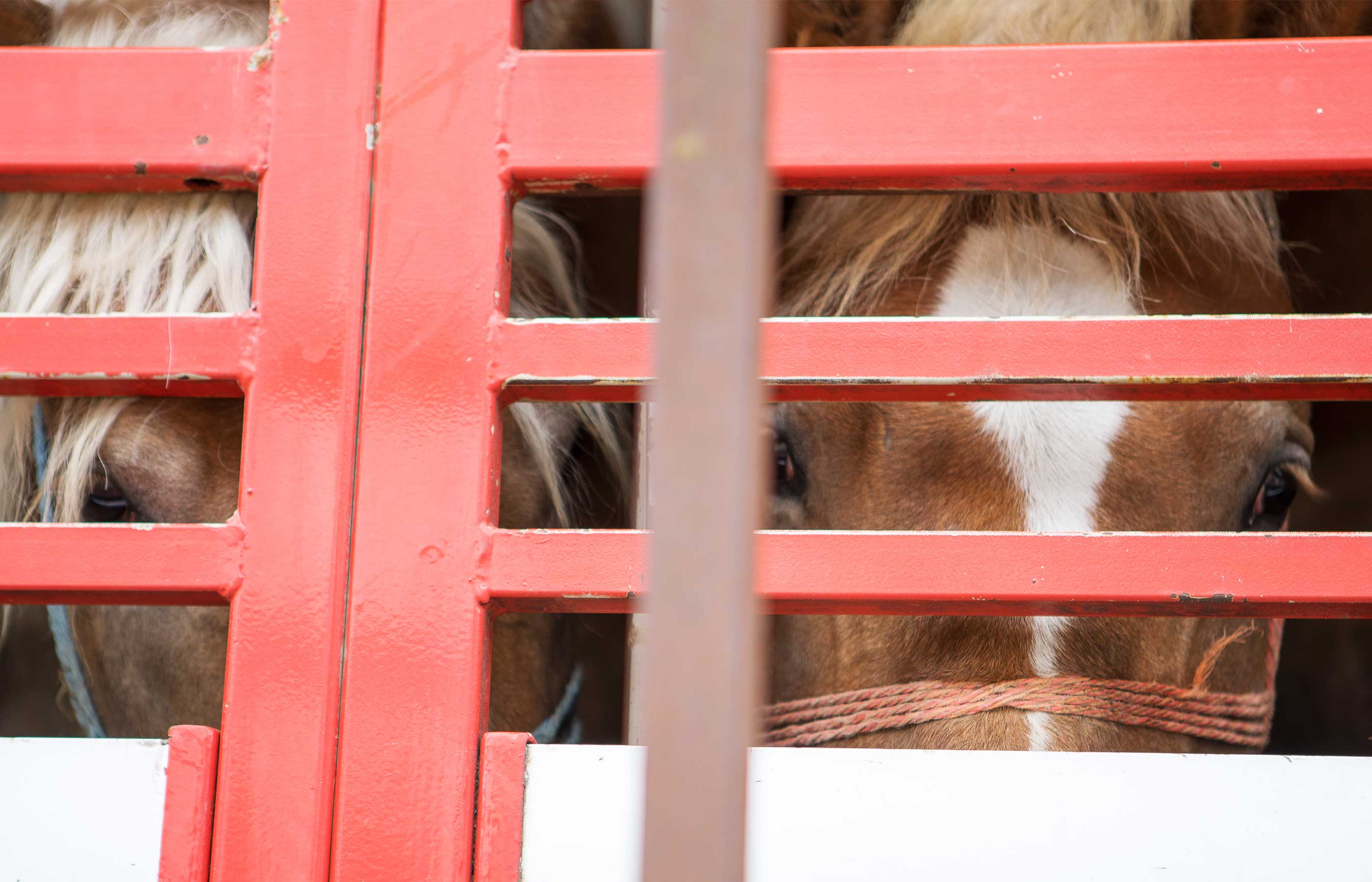
To our dismay, EU member states are considering increasing maximum journey times for horses being transported across Europe for slaughter to 31 hours – despite the views of the public and scientists and the recent exposure of significant gaps in traceability of horses and horse meat.
Under the proposed change, horses travelling for longer than 21 hours would need to rest at a control post for 24 hours, before their journey resumes and they reach the 31-hour limit. Sea travel isn’t included in the journey time limit being proposed, so total journeys could be significantly longer than 31 hours.
Proposed increase in journey time limit at odds with findings of recent YouGov poll
In stark contrast to this proposed change, EU citizens are on average in favour of reducing maximum journey times. Earlier this year, a YouGov poll* we commissioned found that, on average, a majority of citizens across five major EU countries (an average of 55% across the five nations) support stricter protections for horses during transport and back a 9-hour limit on journeys to slaughter. Only 16% of people (averaged across the five markets) were against the idea of a 9-hour maximum journey time.
Our Chief Executive Roly Owers said:
“We are appalled by this proposal. Extending journey times for horses beyond the proposed 9-hour journey limit is simply terrible for horse welfare. It also disregards the lack of traceability of horses compared to other livestock and risks widening the yawning gaps exposed by Europol and NGO investigations in the horse meat supply chain. At a time when there is an opportunity for change which genuinely protects the welfare of horses being transported to slaughter – and when EU citizens have made their support of improvements clear – the revelation that EU Member States propose increasing the maximum journey time limit defies all logic.”
How a 9-hour limit could put a stop to long-distance slaughter routes
The data for 2025 show that around 12,000 horses were transported long distance across Europe for slaughter in 2025 – approximately half the number recorded a decade earlier. Many were transported from northern Europe down to the Mediterranean, passing suitable licenced slaughterhouses along the way. A 9-hour limit would encourage this trade to use suitable slaughterhouses closer to the point of origin, reducing unnecessary long-distance journeys across Europe. In contrast, a 31-hour limit would allow most existing long-distance slaughter journeys to continue.
Roly added:
“Given the relatively small scale of this trade, adapting supply chains to prioritise slaughtering the horses closer to the point of origin is realistic and proportionate, with minimal impact on the wider equine sector. A nine-hour journey limit is feasible, with an exception only in the relatively rare occasions where no licensed horse slaughterhouse can be reached within this time.
“We urge MEPs to take heed of published scientific opinion, along with EU citizens’ views, and take action to ensure that this once-in-a-generation opportunity to improve equine welfare is not squandered. Introducing a maximum journey limit of nine hours for horses going to slaughter would benefit thousands of horses each year, while increasing the journey limit would create extraordinary – and entirely needless – suffering. The Council text containing the proposed new limit isn’t yet finalised so we’re calling on Member States to change this before it’s too late.”
Nearly 6 in 10 poll respondents support legislation that accounts for horses’ unique needs
In addition to the findings on journey limits, the YouGov poll revealed that an average of 67% of respondents support the same minimum welfare standards being applied to all horses, regardless of their role. Nearly 6 in 10 (58%) of those surveyed believed legislation should account for horses’ unique needs.
Our charity says the results reflect a public expectation that horses should not be treated simply as generic livestock, but protected through rules that reflect their distinct physical, behavioural and welfare needs.
MEPs urged to prevent longer journeys and increased suffering for slaughter horses
Roly added:
“Our founder, Ada Cole, witnessed the suffering of horses being transported to slaughter nearly 100 years ago and was determined to stop it. We are horrified that EU decision-makers are proposing changes which will cause thousands of horses each year to endure even greater suffering and urge MEPs to prevent this travesty.”
* All figures, unless otherwise stated, are from YouGov Plc. Total sample size was 5,258 adults (France N=1020, Germany N=1131, Spain N=1006, Italy N=1088, Poland N=1013). Fieldwork was undertaken between 5th – 25th February 2026. The survey was carried out online. The figures for each country have been weighted and are representative of all adults in that country (aged 18+). World Horse Welfare have taken averages of the polling data for each country to give an overall figure.
Related reading
Share
Topics
Related News

Calling for urgent action to protect Africa’s donkey population
Calling on Africa's member states to move from 'vision to action' to protect donkey populations across the continent, at the 92nd WOAH General session in Paris

How our charity is making sure horse smuggling remains on the political agenda
We visit Westminster to talk with MPs about how they can help to disrupt this cruel trade.
Recommended Blog Posts

A (nearly) century long commitment
Ending the long-distance transport of horses for slaughter.

Laminitis: what is it, why do horses get it, and how is it treated?
Head of UK Support Sam Chubbock explains what laminitis is, what causes it and how it can be treated.

EU poll shows strong support for tougher horse transport welfare laws
New research across five EU countries reveals strong public backing for a nine-hour slaughter journey limit and better protection for all equines.
Enjoy reading stories like this?
Join over 65,000 other horse lovers and sign up for our email newsletter

Join over 65,000 other horse lovers and sign up for our email newsletter
Sign me up now
